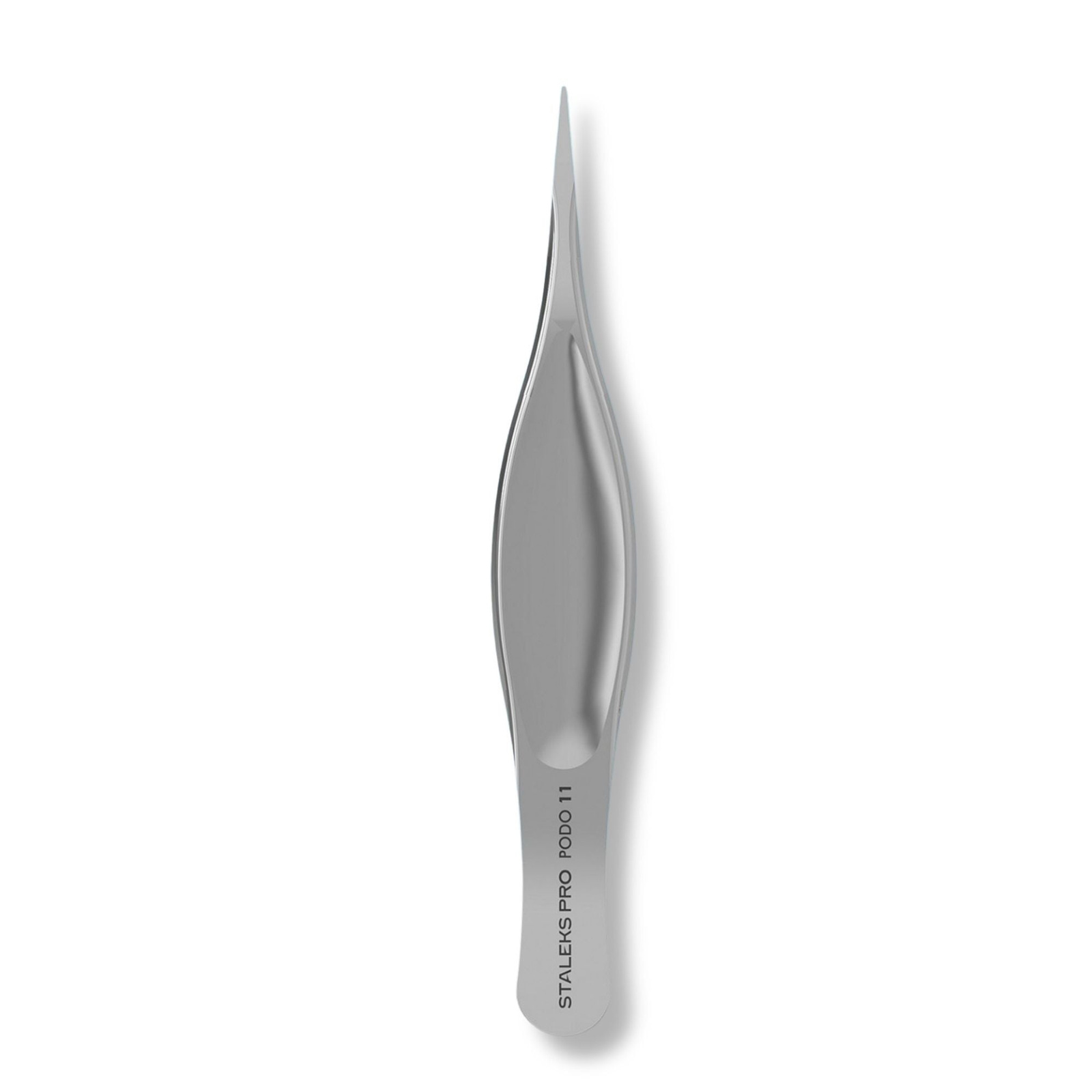
Staleks Pro PODO 11 Podology Splinter Tweezers Ergonomic Precision Instruments TP-11
- Domyślny opis krótki
Purpose-built precision tweezers for podology and pedicure tasks where accurate removal of splinters, ingrown fragments, and fine debris is required. Narrow, tapered tips and a stable, balanced body enable controlled, minimally invasive handling in periungual and plantar areas while preserving visibility and grip.
Key featuresDurable stainless steel: High-grade material resists corrosion and tolerates repeated sterilization.
Fine precision tip: Tapered, narrow points secure tiny splinters without excessive pressure on surrounding tissue.
Ergonomic control: Balanced profile with a textured holding zone for confident, non-slip handling during detailed work.
Reliable alignment: Rigid jaw construction preserves tip integrity and accurate closure over time.
Easy to clean: Polished surfaces facilitate thorough disinfection and autoclave compatibility.
For podologists, pedicurists, and medical foot-care professionals in clinical, salon, or mobile settings. Optimized for extracting splinters, fine fragments, and ingrown material from sensitive areas of the foot where precise, controlled removal is essential.
Technical specificationsMaterial: Stainless steel
Tip style: Fine, narrow splinter tip
Finish: Polished, easy-clean surface
Sterilization: Compatible with standard disinfection and autoclave procedures
Model: PODO 11 (Small) — MPN: TP-11
Pack: 1 piece
Rinse promptly after use with a soft brush and running water to remove residues. Follow clinic or salon disinfection protocols, dry thoroughly to prevent spotting, and autoclave when required. Store in a protective case or instrument tray to protect tips. Inspect alignment regularly and service or replace if tips become damaged or misaligned.
SafetyUse with care to avoid puncture injuries. Apply only to intact tissue adjacent to the affected site; stop use if excessive bleeding, pain, or signs of infection occur. Do not use on inflamed or compromised areas without appropriate clinical assessment. Replace the instrument if dropped, bent, or showing corrosion. Adhere to local hygiene and device reprocessing regulations.